Unlocking Profit Potential: Automated Trading Strategies
In today's fast-paced financial markets, time is of the essence. Traders hungry to maximize their profits are increasingly turning to automated trading strategies as a means to gain a competitive edge. These sophisticated systems utilize algorithms and computer programming to execute trades based on predefined rules and market conditions, allowing traders to react rapidly to price movements and minimize risk. By automating the trading process, individuals can free up their time to focus on other dimensions of their business or personal life, while simultaneously harnessing the power of technology to enhance their trading performance.
The potential benefits of automated trading are manifold. , it allows for increased efficiency by executing trades at speeds impossible for human traders. This can lead to better returns by capturing fleeting market opportunities and minimizing costly errors. Moreover, automated systems can operate 24/7, constantly monitoring market data and executing trades as per the set parameters, removing the need for constant human supervision.
- Automated trading strategies can be customized to align an individual's risk tolerance and investment goals.
- Furthermore, they can help traders develop disciplined trading habits by adhering strictly to pre-defined rules, dampening the influence of emotional decision-making.
As the financial markets continue to evolve at an unprecedented pace, automated trading strategies are poised to become an integral part of any successful trading arsenal.
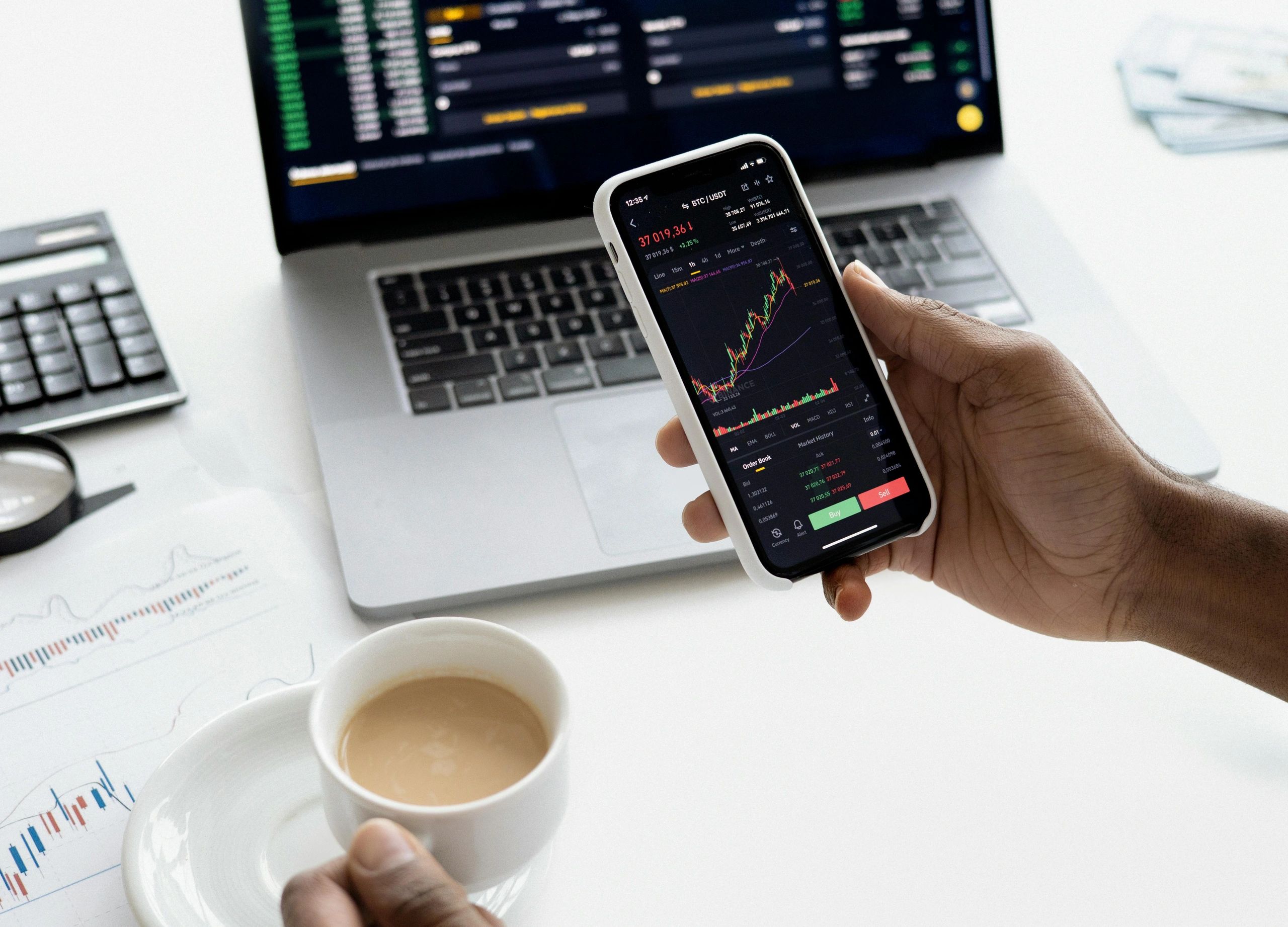
Automated Trading: The Beginner's Manual
Dive into the exciting world of algorithmic/automated/robotic trading with this comprehensive guide designed specifically for beginners. Learn the fundamentals of how algorithms are utilized/employed/implemented to execute trades, analyze market data, and potentially maximize profits. This guide will cover essential concepts like order types, risk management, backtesting strategies, and popular trading platforms/software/tools. Whether you're a novice investor or simply curious about the power of automation, this resource provides a clear and concise introduction/overview/explanation to the fascinating realm of algorithmic trading.
- Explore/Discover/Uncover the core principles behind algorithmic trading strategies.
- Understand/Grasp/Comprehend how algorithms analyze market trends and identify profitable opportunities.
- Learn/Master/Acquire essential tools and techniques for developing your own trading algorithms.
Programmed Trading Platforms: Revolutionizing Financial Markets
Automated trading platforms are rapidly transforming the landscape of financial markets. These sophisticated systems leverage advanced algorithms to execute trades at incredible speeds, often exceeding human capabilities. By streamlining trading processes, these platforms offer a variety of advantages to both individual investors and institutional players.
One key benefit is the ability to execute trades with fidelity, minimizing emotional bias. Moreover, automated platforms can analyze vast amounts of data, identifying trends that may be missed by human analysts. This optimized market intelligence empowers traders to make more informed decisions.
Furthermore, automated trading platforms offer enhanced efficiency. They can constantly monitor markets and execute trades in real-time, optimizing market fluctuations. This dynamic approach can lead to optimized returns. However, it's vital for traders to understand the complexities associated with automated trading and implement robust risk management strategies.
Developing Winning Algorithmic Trading Strategies
Constructing a profitable algorithmic trading strategy is a multifaceted process that demands a blend of rigorous analysis, technical expertise, and a touch of creative innovation. Begin by selecting a specific market or asset class to focus your efforts on. In-depth research is paramount to understanding its dynamics and identifying potential trading signals. Leverage historical data to train your algorithms, regularly refining them based on performance benchmarks. Remember that the market is in a constant state of flux, so adaptability is crucial for long-term success.
The Dawn of Algorithmic Finance: Automated Trading's Ascent
The financial landscape is rapidly evolving/undergoes constant transformation/shifts dramatically as technology continues to advance/makes strides/pushes boundaries. At the forefront of this evolution stands/resides/dominates automated trading, a system where sophisticated algorithms/complex programs/intelligent software execute trades at lightning speed/breakneck pace/unprecedented velocity. This paradigm shift/revolution in finance/disruptive innovation offers/presents/entails a myriad of benefits, from increased efficiency/optimized performance/enhanced productivity to reduced risk/mitigated volatility/lowered exposure.
Traditional trading methods/Manual trading strategies/Human-driven execution are increasingly being challenged/replaced/outpaced by the precision and scalability/flexibility/adaptability of automated systems. As algorithms analyze vast amounts of data/process information in real time/monitor market trends, they can identify patterns/opportunities/signals that may escape human traders/be missed by conventional methods/remain undetected. This data-driven approach/analytical rigor/quantitative insight allows for more informed decisions/strategic execution/tactical maneuvering, potentially leading to greater returns/improved profitability/enhanced financial outcomes
- However, automated trading also presents challenges. / Nevertheless, the rise of automated trading brings its own set of concerns./ Despite its advantages, automated trading is not without its risks.
- {The potential for algorithmic errors/systemic vulnerabilities/unforeseen consequences requires careful consideration./ Regulation and oversight must evolve to address these complexities/challenges/issues. / Governments and financial institutions are actively working to develop frameworks that promote both innovation and stability in the automated trading landscape.
- As we navigate this evolving terrain, it is crucial to strike a balance between harnessing the power of automation and mitigating its potential downsides./ The future of finance will likely be shaped by/defined by/influenced by the successful integration of human expertise and algorithmic intelligence./ Ultimately, the goal is to leverage technology to create a more efficient/more transparent/more inclusive financial system for all.
Maximize Returns with Automated Trading Systems
Harness the power of technology to amplify your trading potential with automated systems. These sophisticated programs leverage algorithms and real-time market data to trigger trades rapidly, reducing emotional decisions. By streamlining repetitive tasks, you can allocate your time to {strategic planning and exploration. Automated trading systems offer a robust solution for traders of all levels, enabling them to exploit market opportunities.
- Improve your trading accuracy with data-driven insights.
- Implement trades at lightning speed, seizing fleeting market moments.
- Optimize your portfolio performance through algorithmic precision.
Unlock the Power of Algorithms: Automated Trading Secrets
In the dynamic realm in finance, algorithms have emerged as a powerful tool for traders aiming to optimize their returns. Computerized trading systems leverage complex mathematical models and statistical analysis to generate trades with lightning-fast precision. By harnessing the power of these algorithms, traders can minimize emotional biases, exploit market movements strategically, and potentially achieve superior performance.
- Algorithms
- Data Processing
- Order Placement
Moreover, algorithmic trading enables traders with the ability to simulate strategies, identify profitable scenarios, and continuously optimize their approaches based on current market data.
Advanced Techniques in Algorithmic Trading
Algorithmic trading has evolved at a rapid pace, with traders constantly seeking innovative methods to optimize performance. Fundamental analysis techniques are increasingly being augmented by advanced algorithms that leverage machine learning, deep learning, and other mathematical models. This allows for real-time execution and the ability to exploit market inefficiencies with greater accuracy. Some of the prominent advanced techniques include sentiment analysis, which help traders analyze vast amounts of data to estimate future price movements. Furthermore, portfolio optimization algorithms are used to control potential losses and enhance overall returns.
Advanced Trading Strategies: Backtesting and Optimization
Before deploying any trading strategy into live markets, rigorous backtesting is essential. This process involves simulating the strategy's performance on historical market data to quantify its potential strengths and weaknesses. Through comprehensive backtesting, traders can adjust parameters and rules to improve profitability and risk management.
Furthermore, robust optimization techniques, such as stochastic gradient descent, can be employed to reveal the optimal configuration for a trading strategy. This iterative process of backtesting and optimization allows traders to develop reliable strategies that are better equipped to perform in dynamic market conditions.
Algorithmic Trading: Leveraging Data for Market Gains
Quantitative trading, frequently referred to as quant trading, represents a sophisticated investment strategy that heavily relies on data-driven insights to identify and capitalize on profit potential. Unlike traditional trading methods that rely heavily on intuition and market sentiment, quantitative traders implement complex algorithms to analyze vast amounts of historical data, aiming to generate reliable gains. This evidence-based approach seeks to reduce subjective judgment from the trading process, fostering a structured approach to profit generation.
{Furthermore,|Moreover,{quantitative trading strategies can be tailored todiverse asset classes, allowing traders to optimize their portfolios based on their individual market outlook. The continuous evolution of financial technology and the expanding reach of data have driven the growth of quantitative trading, making it an increasingly dominant force in the global trading ecosystem.
Demystifying Algorithmic Trading: Key Concepts Explained
Algorithmic trading utilizes a set of pre-defined parameters to execute trades in financial assets. These systems, often powered by complex statistical models, analyze vast amounts of market signals to identify opportunities and create trading strategies.
- Essential concepts in algorithmic trading include validation to test the performance of algorithms, capital allocation to mitigate potential losses, and execution methods like limit orders.
Moreover, understanding price movements, company performance, and market sentiment is vital for developing successful algorithmic trading strategies.
Crafting Effective Automated Trading Rules
Generating profitable automated trading rules necessitates a meticulous understanding of market dynamics and a disciplined strategy. Traders should start by selecting their trading niche, whether it's day trading, swing trading, or long-term investing. , Then, they need to analyze historical market data to uncover trends and patterns that can be utilized in their trading rules. It's crucial to backtest these rules using historical data to assess their performance. Furthermore, traders should continuously evaluate the performance of their automated systems and make modifications as needed to adapt with changing market conditions.
Unveiling the Mental Game in Automated Trading
In the fast-paced world within automated trading, staying ahead requires more than just technical expertise. Understanding the psychological aspects of this complex field is paramount to achieving sustainable success. Traders must cultivate emotional resilience, discipline, and a clear outlook to navigate the fluctuations inherent in financial markets. Developing strong risk management strategies and conforming to pre-defined trading protocols can help minimize emotional impulses. By embracing a disciplined approach and enhancing mental fortitude, traders can succeed in the dynamic landscape of automated trading.
Concisely, success in automated trading is a combination of technical prowess and psychological soundness. By addressing the mental obstacles head-on, traders can position themselves for long-term growth and profitability.
Mitigating Risk in Automated Trading Systems
In the dynamic realm of automated trading, risk management serves as a fundamental pillar for sustainable success. As these systems process trades at lightning speed based on predefined algorithms, unforeseen market conditions can quickly erode profits if not adequately addressed. A robust risk management system is vital for assessing potential threats, establishing safeguards, and controlling losses. This entails a multifaceted approach that encompasses position sizing, stop-loss orders, diversification, and constant monitoring of market trends.
- Various risk factors must be carefully analyzed, such as market volatility, liquidity, counterparty risk, and regulatory changes.
- Implementing advanced risk management tools and techniques can help traders achieve a deeper understanding of potential risks and make informed decisions.
- A well-defined risk tolerance level should be set to direct trading activities and prevent excessive exposure to unacceptable losses.
Ultimately, effective risk management is an persistent process that requires a combination of technical expertise, sound judgment, and a disciplined approach.
Algorithmic Trading for High Frequency Market Participation
High frequency trading (HFT) has revolutionized financial markets, characterized by rapid order execution and sophisticated algorithms. Automated trading systems are pivotal in enabling HFT strategies, executing trades at speeds unattainable by human traders. These systems leverage complex mathematical models and real-time market data to identify fleeting arbitrage opportunities and capitalize on price discrepancies. The deployment of automated trading involves intricate programming platforms such as C++, Python, and Java. Stable order routing mechanisms are crucial for ensuring timely execution of trades at optimal prices. Furthermore, risk management strategies are paramount to mitigate potential losses in the volatile environment of HFT.
Scaling Your Automated Trading Business: Strategies and Tools
Automating your trading operations can be a game-changer, but scaling your automated trading business requires careful planning and the right tools. One crucial factor is optimizing your trading strategy. This involves periodically testing its performance, making adjustments based on market dynamics, and perhaps incorporating fresh data sources.
Another key element is robust infrastructure. You'll need reliable servers with ample processing power to handle your increasing trading volume. Consider utilizing cloud computing solutions for scalability and resilience.
Lastly, don't neglect risk management. As your business develops, so does the potential impact of losses. Implement rigorous risk mitigation measures to protect your capital and ensure long-term growth.
- Stay abreast of the latest technological advancements in the trading world.
- Explore integrating artificial intelligence (AI) and machine learning (ML) into your trading system.
- Connect with other automated traders to share knowledge, insights, and potential partnerships.
Beyond Simple Orders
Algorithmic trading has evolved rapidly from basic order execution. Modern practitioners are leveraging complex techniques that analyze market trends in real-time, identifying subtle patterns and harnessing fleeting opportunities. These sophisticated algorithms implement a range of strategies, including trend following, high-frequency operations, and even deep learning-powered methodologies. The result is a dynamic market where human traders often find themselves interacting with the ever-increasing sophistication of algorithmic counterparts.
Harnessing APIs for Automated Trading Success
In the dynamic realm of automated trading, seamlessly connecting APIs has emerged as a paramount strategy for achieving exceptional outcomes. By leveraging the power of application programming interfaces, traders can optimize complex tasks, such as data acquisition, evaluation, and execution of trades with unprecedented efficiency. APIs provide a versatile framework for linking disparate trading systems, enabling traders to utilize real-time market data, execute orders effectively, and assess portfolio performance with granularity.
- Moreover, APIs facilitate the implementation of sophisticated algorithms and trading strategies, empowering traders to exploit market shifts with greater precision. By leveraging API-driven solutions, traders can elevate their investment capabilities and navigate the dynamic world of financial markets with certainty.
Next-Gen Trading Platforms
Trading platforms are transforming at a breakneck pace, driven by the relentless march of AI. This new generation of platforms is enabling traders with unprecedented levels of control, allowing them to execute trades with speed and accuracy that was once out of reach.
The rise of algorithmic trading and high-frequency order execution is disrupting the landscape, opening exciting new opportunities for both individual and institutional investors. These platforms are designed with advanced analytics to interpret market data in real-time, providing traders with actionable insights that can maximize their gains.
The future of trading is autonomous, and these next-generation platforms are leading the charge for a new era in financial markets.
Evaluating Automated Trading Success
Measuring the performance of automated trading platforms is essential for gauging their profitability. A variety of indicators can be leveraged to evaluate the performance of these systems, providing valuable insights into their strengths and weaknesses.
Fundamental metrics include:
* Return on Investment (ROI)
* Volatility
* Maximum Capital Risk
Analyzing these data points in conjunction with other factors, such as market conditions, can provide a comprehensive perspective of an automated trading platform's effectiveness.
Ethical Implications of Algorithmic Trading
The burgeoning field of algorithmic trading presents a complex landscape of ethical considerations. While these systems offer unparalleled efficiency and speed, concerns regarding accountability in their decision-making processes have come to the forefront. Central concern is the potential for , discriminatory outcomes, which can exacerbate existing inequalities in financial markets. more info Additionally, the high frequency and complexity of algorithmic trades can create market volatility, posing a threat to market stability and investor confidence.
- Navigating this complex terrain requires a multi-faceted approach involving robust regulatory frameworks, enhanced transparency in algorithmic design, and ongoing evaluation of trading practices.
- Furthermore, fostering a culture of ethical responsibility within the financial industry is paramount to guaranteeing fair and equitable markets for all participants.